THE SHORT ANSWER
Automated B2B lead outreach is the practice of using software, behavioral data, and AI-driven messaging to contact qualified prospects at scale without manual effort for each touchpoint. Teams that automate b2b lead outreach replace one-off cold emails with triggered, multi-touch sequences that respond to real buyer behavior.
Automated B2B lead outreach is the practice of using software, behavioral data, and AI-driven messaging to contact qualified prospects at scale without manual effort for each touchpoint. Teams that automate b2b lead outreach replace one-off cold emails with triggered, multi-touch sequences that respond to real buyer behavior. Teams using automation for scoring, CRM sync, and triggered follow-ups see approximately 35% higher lead conversion rates than teams running manual processes. That gap widens every quarter you delay building the system.
What tools and data do you need to automate B2B lead outreach?
The foundation of any automated outreach system is clean data. Dirty CRM records produce misdirected sequences, wasted spend, and burned sender reputation. Before you configure a single workflow, audit your contact database for duplicate records, missing job titles, and outdated company data.
Lead enrichment closes the gaps that raw form fills leave behind. When a prospect submits only a name and email, enrichment tools append firmographic data like company size, industry, and technology stack. That context lets your automation platform assign the right sequence and the right message without a sales rep manually researching each contact.

Behavioral lead scoring is the second non-negotiable. Binary scoring, where a contact either attended a webinar or did not, misses the signal entirely. Granular scoring tracks watch depth, Q&A participation, poll answers, and CTA clicks. Behavioral signals like these enable precise sales routing and urgent follow-up targeting for the highest-intent accounts.
Sales and marketing alignment determines whether automation produces revenue or just activity. Both teams must agree on the definition of a qualified lead, the handoff trigger score, and the messaging tone before any sequence goes live. Without that agreement, automation accelerates the wrong conversations.
Tool category | Core function | What it enables |
|---|---|---|
Lead enrichment platforms | Append firmographic and technographic data | Accurate segmentation and personalized messaging |
CRM automation layers | Sync contact records and trigger workflows | Real-time pipeline visibility and sequence enrollment |
Email sequencing platforms | Send behavior-triggered multi-touch messages | Consistent follow-up without manual scheduling |
Behavioral scoring engines | Score contacts by engagement depth | Priority routing to sales for high-intent leads |
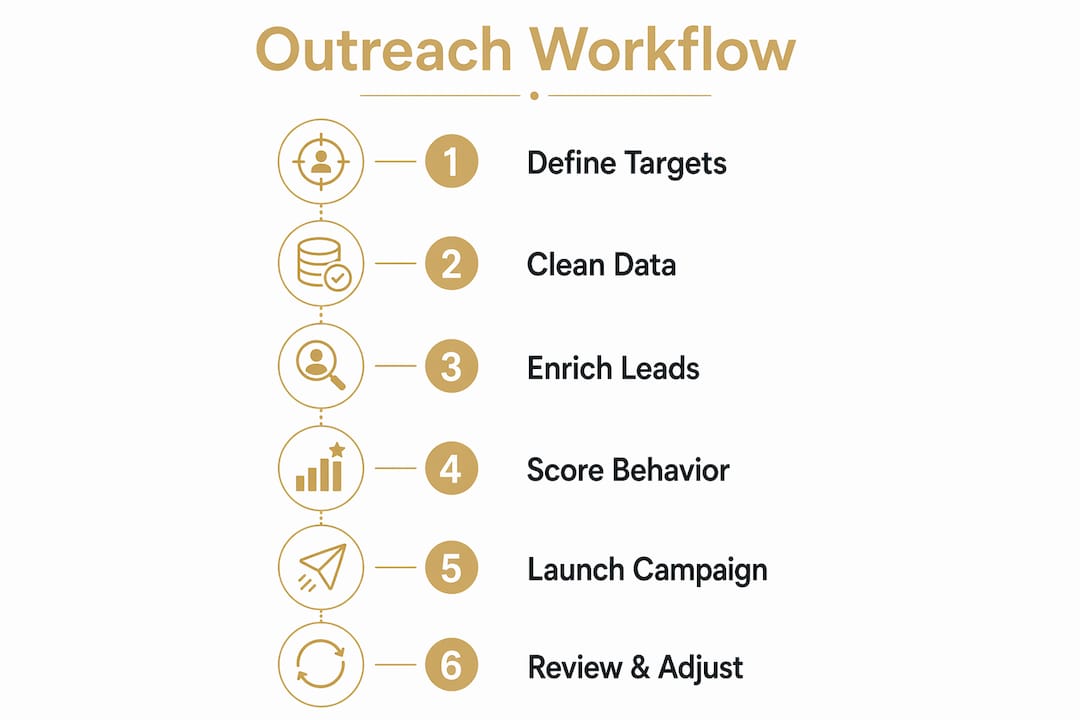
How to build a step-by-step automated outreach workflow
A repeatable workflow removes the guesswork from pipeline building. The steps below reflect how high-performing B2B teams build b2b lead pipeline without adding headcount.
Define your target accounts. Use firmographic filters and buyer intent data to build a focused account list. Intent signals like content consumption patterns and technology adoption indicate active buying cycles before a prospect ever raises their hand.
Automate lead discovery and enrichment. Connect your intent data source to an enrichment layer that appends verified contact details. This step feeds your CRM with qualified, data-complete records automatically.
Configure AI-driven personalized messaging. Generic outreach fails. Personalized outreach to target accounts converts 3 to 5 times more effectively than broad marketing blasts. Use AI to generate message variants that reference the prospect’s industry, role, and recent behavior.
Set up multi-touch, behavior-triggered sequences. A single email is not a sequence. Build follow-up steps that trigger based on opens, clicks, replies, and page visits. Multi-tiered behavioral follow-up consistently outperforms generic single broadcast messages.
Hit the 72-hour engagement window. Speed matters more than most teams realize. B2B leads engaged within 72 hours of a trigger event convert at roughly twice the rate of leads contacted later. Build your sequences to fire within that window automatically.
Apply human-in-the-loop oversight. Full automation without review creates deliverability risk. Effective B2B outreach systems use human confirmation gates before messages send. A daily 15-minute review of the outbound queue catches tone errors and personalization failures before they reach inboxes.
Measure pipeline impact, not vanity metrics. Open rates tell you about subject lines. Pipeline created tells you about revenue. Track meetings booked, opportunities opened, and deals influenced per sequence.
Pro Tip: Set your daily send approval as a calendar block, not a task. Teams that treat the review as a scheduled meeting maintain it consistently. Teams that treat it as optional skip it when things get busy, and deliverability suffers within weeks.
What are the common challenges when automating lead outreach?
Over-automation is the most common failure mode. Sales teams configure a sequence, turn it on, and never touch it again. The market shifts, the messaging goes stale, and reply rates collapse. Automation requires active maintenance, not just initial setup.
Deliverability is a technical problem that most teams treat as a content problem. Sending too many emails per day from a new domain, skipping warm-up protocols, and ignoring bounce rates all trigger spam filters. The fix is technical: domain warm-up, DKIM and SPF authentication, and sending volume ramps over 4–6 weeks before reaching full capacity.
Generic follow-ups kill pipeline faster than no follow-up at all. A prospect who attended a product demo and then receives a “just checking in” email experiences a disconnect that signals your team is not paying attention. Behavioral scoring granularity solves this by routing high-engagement contacts to personalized sequences and low-engagement contacts to nurture tracks.
Measuring pipeline impact instead of vanity metrics is the single clearest indicator of whether your automation is working. Revenue-first pipelines reverse-engineer required outreach volumes from quarterly revenue targets. That discipline keeps automation focused on deals, not activity counts.
Content balance inside sequences matters as much as timing. High-converting B2B sequences maintain an 80/20 ratio of educational content to direct sales pitch. Sequences that lead with value build trust before asking for a meeting. Sequences that open with a pitch train prospects to ignore them.
How do pipeline management tools integrate with outreach automation?
Revenue orchestration is the practice of connecting your CRM, scoring engine, outreach platform, and analytics layer into a single system that moves leads through the pipeline without manual handoffs. The concept matters because disconnected tools create data gaps. A lead that clicks an email but never gets scored as a CRM opportunity is a lost conversion hiding in plain sight.
Automated activity tracking is the operational core of this integration. When every email open, reply, meeting booked, and call completed writes back to the CRM automatically, sales managers see accurate pipeline velocity without chasing reps for updates. Revenue orchestration platforms deliver meaningful pipeline visibility within 10 days of implementation when configured with automated activity tracking. That speed of insight changes how sales leaders prioritize their week.
Modern pipeline management is moving from manual reporting to automated activity velocity monitoring. That shift improves deal forecast accuracy and helps sales teams prioritize the accounts most likely to close this quarter.
The table below maps feature categories to their pipeline impact.
Feature category | Pipeline benefit |
|---|---|
Automated activity logging | Accurate deal stage data without manual CRM entry |
Lead score to CRM sync | Instant routing of high-intent leads to sales |
Behavior-triggered sequences | Timely follow-up without rep intervention |
Pipeline velocity dashboards | Real-time view of deals at risk and deals accelerating |
Revenue goal reverse-engineering | Outreach volume targets tied directly to quarterly revenue |
Integrating these categories into a single workflow is what separates teams building b2b sales sequences that produce revenue from teams producing activity reports. The goal is not more touchpoints. The goal is the right touchpoint at the right moment for the right account.
Key Takeaways
Automated B2B lead outreach works when behavioral scoring, enriched data, and human oversight combine to deliver personalized, timely sequences that move prospects through the pipeline.
Point | Details |
|---|---|
Clean data comes first | Enrich and audit your CRM before activating any automated sequence. |
Score behavior, not just attendance | Track watch depth, clicks, and Q&A participation to route leads accurately. |
Hit the 72-hour window | Leads contacted within 72 hours of a trigger event convert at twice the rate. |
Keep humans in the loop | Daily review of outbound queues prevents deliverability damage and tone errors. |
Measure pipeline, not opens | Track meetings booked and opportunities created, not email open rates. |
Automation is infrastructure, not a shortcut
The teams I see struggle most with outreach automation treat it like a campaign. They build a sequence, launch it, and expect results to arrive on their own. That framing is wrong. Automation is demand generation infrastructure. It requires the same ongoing investment as your website or your CRM.
What actually works is treating sales involvement as a continuous input, not a handoff event. Sales involvement before, during, and after demand generation activities dramatically increases outreach conversion by adding relevance and personalization that no AI can fully replicate alone. The best automated systems I have seen still have a sales rep reviewing the highest-intent accounts every morning and adding a personal note before the sequence fires.
The other thing most articles skip: automation accelerates your pipeline velocity, but it also accelerates your mistakes. If your ICP definition is wrong, automation finds that out faster and at greater cost than manual outreach ever would. Get the targeting right first. Then build the automated lead flow around it.
The teams winning in 2026 are not the ones with the most sophisticated AI. They are the ones who built clean data pipelines, defined clear handoff triggers, and kept a human close enough to the system to catch what the machine misses.
— Mieke
How Flockleads builds your outreach pipeline for you
Flockleads generates qualified B2B leads and delivers them directly to your website, so your sales team spends time on conversations, not prospecting.
Flockleads builds engineered lead flows that combine AI-assisted personalization, CRM sync, and multi-touch follow-up sequences into a single system. You define your target accounts and revenue goals. Flockleads handles the discovery, enrichment, and outreach infrastructure that fills your pipeline. Teams that want to see what a hands-free lead pipeline looks like in practice can review real outreach implementations across service businesses. The result is a consistent flow of qualified leads without the manual overhead.
Frequently asked questions
What does it mean to automate B2B lead outreach?
Automated B2B lead outreach uses software to send personalized, behavior-triggered messages to qualified prospects without manual effort for each contact. It combines lead enrichment, behavioral scoring, and multi-touch sequences into a single workflow.
How quickly should you follow up with a B2B lead?
Sales teams should engage new leads within 72 hours of a trigger event. Leads contacted inside that window convert at roughly twice the rate of leads reached later.
What is behavioral lead scoring?
Behavioral lead scoring assigns point values to specific prospect actions, such as email clicks, page visits, and webinar engagement depth. It routes high-intent contacts to sales immediately and places lower-intent contacts into nurture sequences.
What is a B2B pipeline?
A B2B pipeline is the structured set of stages a prospect moves through from first contact to closed deal. Automated pipeline management tracks deal velocity and flags at-risk opportunities without requiring manual CRM updates from sales reps.
How do you avoid spam filters in automated outreach?
Authenticate your sending domain with DKIM and SPF records, warm up new domains over 4–6 weeks, and keep daily send volumes within safe thresholds. Human review of outbound queues before sending also reduces the risk of deliverability issues.
NEED A CLEARER PLAN?
Let’s turn your next move into momentum.
Talk to us →