THE SHORT ANSWER
YouTube’s role in business growth comes down to three jobs: it gets you discovered, it earns trust faster than most other formats, and it converts that attention into leads and sales. Consumers who discover a product on YouTube are 46% likely to purchase it within about two weeks , and the platform is significantly more likely to positively influence brand consideration than other social
YouTube’s role in business growth comes down to three jobs: it gets you discovered, it earns trust faster than most other formats, and it converts that attention into leads and sales. Consumers who discover a product on YouTube are 46% likely to purchase it within about two weeks, and the platform is significantly more likely to positively influence brand consideration than other social channels. That’s not a branding footnote. That’s a purchase-decision engine hiding in plain sight.
Flockleads sees this pattern constantly in B2B lead generation work: a prospect watches a product walkthrough, reads three reviews, and fills out a form the same week. Video shortens the gap between “never heard of you” and “ready to talk.”
Here’s what this guide covers:
The core benefits YouTube delivers, ranked by business impact
How Shorts, long-form video, and livestreams each move a buyer forward
The metrics that actually predict pipeline, not just views
A 12-week plan to launch or scale a channel built for leads
Where creator partnerships and monetization fit into the picture
None of this requires viral luck. It requires knowing which format does which job.
Key Takeaways
YouTube drives business growth by combining discovery through Shorts, trust-building through long-form and creator content, and conversion through structured playlists and CRM-tracked lead capture.
Point | Details |
|---|---|
Discovery and search work differently | Shorts get found through browse feeds; long-form gets found through search intent, so you need both. |
Retention drives reach | YouTube’s algorithm rewards watch time and session extension, so weak retention limits how far any video travels. |
B2B needs multiple touchpoints | Complex purchases often take 9 to 12 touchpoints, so playlists and series outperform one-off videos. |
Track leads, not just views | Watch time, retention, click-through rate, and CRM-tagged leads matter more than subscriber counts. |
Ramp takes months, not weeks | Measurable B2B lead flow from organic video typically appears around month three or four. |
The Role of YouTube in Business Growth: Core Benefits for Brands
YouTube’s business value breaks into five distinct benefits, and most companies only chase one or two of them.
Reach and discovery. Shorts feed the browse and recommendation algorithms that expose new brands to audiences who never searched for them. Long-form video captures the audiences who did search, since YouTube functions as the second-largest search engine on the internet.
Search visibility that compounds. Video transcripts and metadata get indexed by Google and increasingly surfaced in AI-generated answers, giving well-optimized channels a second front in organic search beyond the blog post.
Trust built through demonstration. A five-minute explainer or an honest product teardown does something a banner ad cannot: it shows the thing working, flaws and all.
Shortened sales cycles. Video answers the objections a prospect would otherwise raise on a sales call, which is why so many B2B teams now treat their channel as a pre-sales tool rather than a marketing add-on.
Diversified revenue. Ads, YouTube Shopping, memberships, and live commerce give a channel multiple ways to generate income once it has an audience.
YouTube’s global net advertising revenue has grown for years running, according to Statista’s tracking of the platform, a signal that advertisers keep reallocating budget toward video because it performs. For brands running lean marketing teams, that’s the case for treating YouTube as infrastructure, not an experiment.
The mistake most businesses make is picking one benefit, usually reach, and ignoring the other four. A channel that only chases views rarely produces leads. A channel that only produces polished long-form videos rarely gets discovered. You need both.
How YouTube Turns Viewers Into Leads and Customers
Discovery and conversion happen through two different mechanisms, and confusing them is why many YouTube strategies stall out.
Shorts get found through the browse feed and the Shorts shelf, largely independent of search intent. A viewer scrolling for entertainment stumbles onto your brand with zero prior awareness. Long-form video works the opposite way: someone types a question into YouTube’s search bar or Google, and your video answers it. One format builds the top of the funnel; the other captures people already looking for a solution.
Retention matters more than most creators realize. YouTube’s recommendation system treats watch time and session extension as ranking signals, so a video that keeps people watching, and keeps them on YouTube afterward, gets pushed to more viewers. A video that gets clicks but immediate drop off tends to fade fast, regardless of the topic’s popularity.
Video also does quiet, unglamorous work as an objection-handling asset. A product demo, an FAQ video, or a walkthrough of a common setup problem removes the friction that would otherwise require a live sales conversation. Prospects who’ve already seen the product in action arrive at a sales call further along than prospects who haven’t.

For B2B specifically, one-off videos rarely close deals. Complex purchases typically involve somewhere between 9 and 12 touchpoints before a decision gets made, and a playlist or series structure gives you a way to create those touchpoints deliberately instead of hoping a single video does all the work. Someone watches an intro video this week, a case study next week, and a comparison video the week after. Each one nudges them further down the path.
Video also strengthens everything else in your marketing stack:
Email capture through gated bonus content or downloadable checklists linked in the description
Remarketing audiences built from viewers who watched a set percentage of a video, then retargeted on Meta or Google
Website conversions, since embedded video on a landing page tends to increase time on page and trust before a form submission
Pro Tip: Build one “cornerstone” playlist per product line, three to five videos that walk a prospect from “what is this” to “here’s proof it works.” Link each video to the next in the description, and you’ve built a self-guided sales sequence that runs while your team sleeps.
Shorts, Long-Form, and Livestreams: Building Your Content Mix
Different formats do different jobs, and treating them interchangeably wastes production budget.
Shorts function as a discovery engine. They’re fast to produce, get pushed hard by the algorithm, and rarely carry much direct ad revenue per view. Their value is top-of-funnel exposure, not immediate monetization.
Long-form video is where authority and revenue concentrate. Format-performance research shows long-form content typically drives higher per-view monetization and stronger purchase intent than short clips, since midroll ads only run on longer videos and viewers who commit to eight or ten minutes are self-selecting for genuine interest.
Livestreams and community posts capture high-intent engagement. A live Q&A or product launch stream lets prospects ask questions in real time, and YouTube’s live shopping tools increasingly let viewers act on that intent immediately.
The practical structure that ties these together is a barbell strategy: publish Shorts frequently for reach, and publish long-form video on a steady but less frequent cadence for depth and monetization. Then atomize each long-form piece into three or four Shorts, a highlight, a stat, a quick tip, so one production effort generates a week’s worth of short content. YouTube’s own 2026 guidance points to this exact pairing as one of the more reliable ways brands lift return on ad spend when they combine organic Shorts with paid long-form promotion.
A realistic cadence for a small marketing team: two to three Shorts weekly, one long-form video every two weeks, and one livestream or Q&A per month once you have enough subscribers to make it worth scheduling. Production doesn’t need a studio. A decent microphone and consistent lighting matter more than a $3,000 camera.
Measuring YouTube’s Impact on Leads and Revenue
Track four numbers before you touch anything else: watch time, audience retention percentage, click-through rate to your website, and leads captured with a video-sourced tag in your CRM. Views tell you almost nothing about business impact on their own.
Retention curves reveal where viewers drop off, which tells you exactly where a script or edit needs fixing. A steep drop at fifteen seconds usually means your hook is weak, not that the topic is wrong. Click-through rate on end screens and description links tells you whether the video is doing its job of moving someone off the platform and toward a conversion point.
For brand impact beyond direct clicks, YouTube’s Brand Lift and Search Lift studies measure whether a campaign changed awareness or increased branded search volume, filling the gap that click tracking alone can’t capture. Pair that with CRM attribution, tagging every lead that mentions or arrives via a video, so pipeline value gets credited to the channel that actually generated it.
The setup itself is straightforward:
Add unique UTM parameters to every link in every video description
Send video traffic to a dedicated landing page with a gated asset, not your generic homepage
Tag CRM records with a “video-sourced” field so sales and marketing can both see which deals started with a view
Most consumers who buy after discovering a product on YouTube do so within about two weeks of that first view, which gives you a rough benchmark for how fast video-driven interest should convert once someone lands on your channel. For B2B, expect the ramp to take longer, since your first ninety days will mostly be spent building enough content volume for retention and search signals to compound. Measurable lead flow from organic video typically shows up in month three or four, not week one.
A 12-Week Plan to Launch or Scale Your YouTube Channel
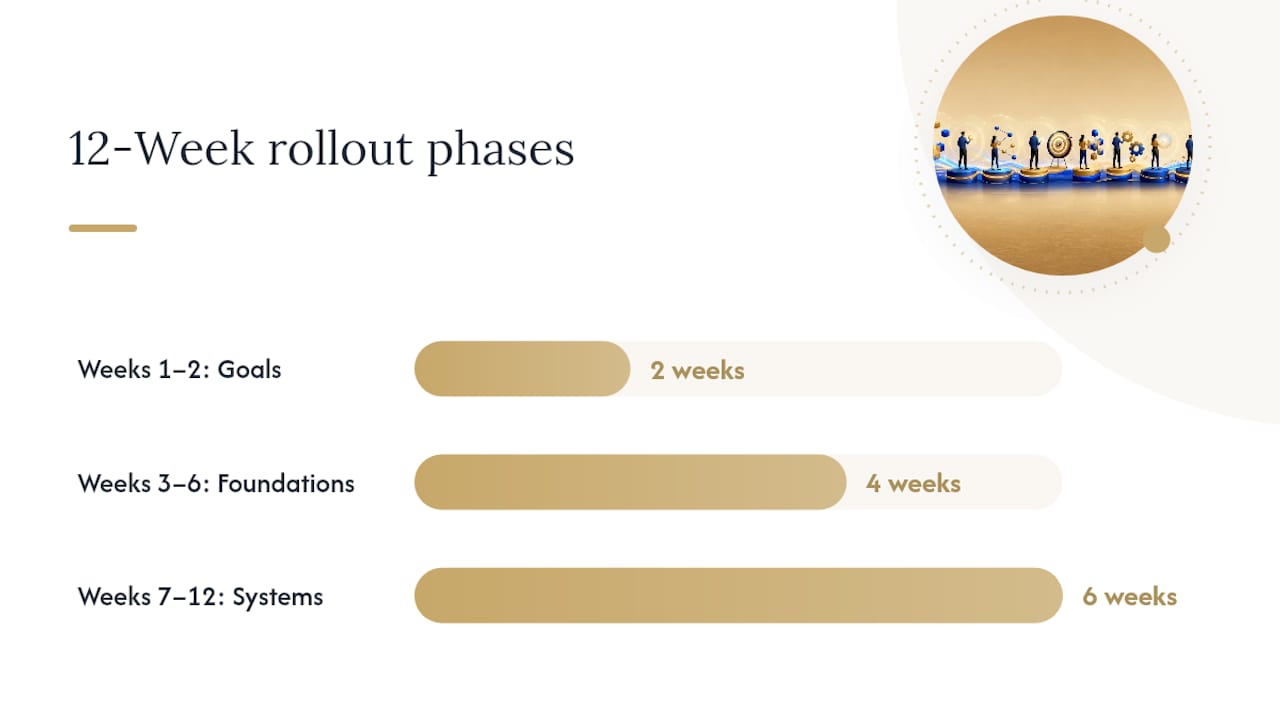
A structured twelve-week rollout beats an unplanned content dump every time, mostly because it forces you to build measurement in from day one instead of bolting it on later.
Weeks 1 and 2: Define goals and pillars. Decide whether the channel exists for lead generation, brand awareness, or both, then research your audience’s actual search behavior and lock in three to five content pillars built around problems your buyers already have, not around what’s trending.
Weeks 3 through 6: Build cadence and foundations. Start publishing Shorts on a consistent schedule, release your first one or two long-form videos, and optimize channel branding, description keywords, and playlist structure so new viewers can find their way around.
Weeks 7 through 12: Layer in systems. Build out playlists that walk prospects through a buying journey, set up a lead magnet tied to your strongest video, connect video traffic to your CRM, and test a small paid boost on your best-performing content to see whether it lifts awareness or search volume.
Minimum toolkit: a decent microphone, a free editing tool like DaVinci Resolve or CapCut, a thumbnail template in Canva, and a spreadsheet or dashboard tracking retention and lead counts weekly. Budget ranges vary widely, but a lean operation can produce a credible cadence for a few hundred dollars a month in tools plus internal time, before any paid promotion.
The most common mistakes worth naming directly: chasing view counts instead of retention and lead quality, publishing in bursts and then going quiet for months, and ignoring the first thirty seconds of a video where most drop off actually happens. A channel with 5,000 subscribers and strong retention will usually outproduce a channel with 50,000 subscribers and shallow engagement, at least when the goal is leads rather than ad revenue.
Pro Tip: Track subscriber growth as a lagging indicator, not a goal. If retention and lead capture are climbing, subscribers follow. Chasing subscribers directly usually means chasing the wrong content.
If your team doesn’t have the bandwidth to run this in-house, comparing a lead generation agency against a lead marketplace is worth doing before you commit internal hours to a twelve-week build.
Using Creator Partnerships to Build Trust Faster
A creator’s audience already trusts them, which is the entire reason creator-driven campaigns often outperform brand-produced ads on the same platform. CreatorIQ’s analysis of retailer campaigns found that creator mentions generated meaningful jumps in impressions and engagement, with several campaigns reporting stronger ROI than traditional digital tactics running alongside them.
Selecting the right creator matters more than chasing the biggest subscriber count. Look for genuine audience overlap with your buyer profile, an engagement rate that holds up under scrutiny (not just view counts), content that fits naturally with what you sell, and a track record of professional delivery on past sponsored content.
Before any deal gets signed, agree on the actual KPIs in writing:
Minimum view or impression thresholds
Engagement rate benchmarks (likes, comments, shares relative to views)
Referral traffic to your site or landing page
Direct conversions tied to a unique promo code or dedicated URL
Measure results with the same rigor you’d apply to a paid ad campaign: boost the creator’s post through YouTube’s paid tools if it performs organically, run a Brand Lift study if the budget supports it, and always use a unique promo code or landing page so conversion credit doesn’t get muddied with your other channels.
What Businesses Can Actually Earn Directly From YouTube
The YouTube Partner Program pays ad revenue once a channel clears the eligibility thresholds, but for most businesses that revenue stays modest compared to the value of the leads and sales the channel generates elsewhere. Treat ad revenue as a bonus, not the plan.
YouTube Shopping and live commerce let you tag products directly in videos and livestreams, giving viewers a checkout path without leaving the platform, a feature that fits product-led businesses far better than service-led ones. Direct commerce options, memberships, paid courses, consult bookings, and affiliate links in descriptions, work for both models but tend to perform best once a channel has built a loyal, recurring audience rather than a one-time viewer base.
A product-led business should prioritize YouTube Shopping and affiliate structures. A service-led business, including most B2B companies, should prioritize memberships, gated content, or consult bookings tied to lead capture rather than in-video checkout.
What Flockleads Sees Working for B2B Lead Generation
Flockleads runs paid and organic channel strategy for B2B clients, and YouTube consistently behaves differently than other paid channels in one specific way: it takes longer to ramp, but the leads that arrive tend to be further along in their decision process.
Expect a longer runway than Google Search ads, typically several weeks before consistent lead flow, since video needs time to build watch history and retention signals.
Integration works best when YouTube feeds a dedicated landing page rather than a generic homepage, with CRM tagging that separates video leads from search or social leads.
Months one through four are mostly optimization: testing hooks, adjusting thumbnail and title pairs, and tightening the retention curve before scaling ad spend behind what’s already working organically.
Businesses with lean internal teams often get to measurable results faster with managed support than by building the skill set from scratch, particularly for the CRM integration and attribution work that most in-house teams skip.
Turn YouTube Attention Into Qualified Leads
Video builds awareness, but awareness alone doesn’t fill a pipeline. Flockleads builds automated lead generation systems for B2B companies that combine YouTube, paid search, and social ad campaigns with qualifying forms, instant CRM delivery, and weekly optimization, so the leads your video content attracts actually land somewhere and get followed up on. If you’re unsure whether YouTube fits alongside your existing channels, Flockleads’ breakdown of how B2B lead generation differs from consumer lead generation is a useful place to start before committing budget. A free audit shows you where your current channel mix has gaps, and where video could be doing more work than it currently is.
The Overlooked Part of YouTube Strategy
Most advice on YouTube for business treats it like a content problem: post more, post better, post consistently. That’s not wrong, but it misses where the actual leverage sits. The businesses getting real pipeline value out of YouTube treat it as a measurement problem first and a content problem second.
The conventional advice obsesses over production quality and posting frequency. Both matter less than most guides suggest. What separates channels that generate leads from channels that generate views is whether someone bothered to tag video traffic in the CRM, build a landing page that isn’t the homepage, and structure content into a sequence instead of a scattershot of unrelated topics.
If you’re starting from zero, don’t chase subscriber count and don’t wait for a viral moment. Build three videos that answer the three questions your best customers ask before they buy. Track where they go after watching. Fix the drop-off point. Repeat. That loop, done consistently for a few months, outperforms almost every “growth hack” version of this advice you’ll find elsewhere.
Sources
The purchase-influence and format-performance claims in this guide draw on Think with Google’s research on video’s role in the purchase decision process and its 2026 YouTube Formula guidance. Creator campaign performance data comes from CreatorIQ’s retailer report, and format-specific monetization patterns are covered in MediaPost’s analysis of what drives YouTube purchases. Platform-scale advertising trends are tracked by Statista, and practical B2B cost and ramp-time expectations are detailed in Flockleads’ guide to YouTube and video ads for lead generation.
Frequently asked questions
How many views do I need to make $10,000 a month on YouTube?
There’s no fixed view count, since ad revenue depends heavily on niche, audience location, and video length, but for most channels ad revenue alone rarely reaches that figure until a channel has substantial long-form watch time. Businesses generally earn far more from leads and sales driven by the video than from direct ad payouts.
What are the benefits of using YouTube for businesses?
The core benefits are reach through Shorts and search discovery, trust built through demonstration and creator endorsement, shortened sales cycles through objection-handling video, and revenue diversification through ads, YouTube Shopping, and memberships.
How many views on YouTube do you need to make $2,000 a month?
This depends on niche and monetization method more than raw view count, since a small, highly relevant audience that converts to leads or sales can be worth more than a much larger but less engaged one. For B2B specifically, relevance and intent alignment matter more than view volume.
How can YouTube be used for business?
Businesses use YouTube to attract new audiences through Shorts and search, build trust through long-form explainers and reviews, shorten sales cycles with demo and FAQ content, and capture leads through gated assets, playlists, and CRM-tagged video traffic.
NEED A CLEARER PLAN?
Let’s turn your next move into momentum.
Talk to us →